
KIT funding
2026 KIT Funding for Hands-On Food Education
California named a new funding source for hands-on food education in school gardens: the Kitchen Infrastructure and Training (KIT) Fund. School districts and the other agencies that run school meals can now spend KIT funds on garden-based education through their food and nutrition services departments, and community-based organizations (CBOs) can partner with them to provide the programs.
As of September 30, 2026. This funding came from our 2026-27 campaign, with the leadership of Senator Sasha Renée Pérez. Read the story.
Who's eligible
Generally, school districts. Technically, school food authorities (SFAs).
An SFA is a school district, county office of education, or charter school that runs both federal school meal programs: the National School Lunch Program and the School Breakfast Program. Most are school districts.
KIT funds are managed by each SFA's nutrition services department, led by its food service director. State law (Education Code section 49507) calls these agencies local educational agencies (LEAs) in the meal programs, where an LEA is an SFA.
See what your SFA received in 2022 and 2025.
The KIT Fund at a glance
$500M
One-time, five program areas
$500 million in a one-time allocation to SFAs, to spend on any of five program areas:
- Kitchen infrastructure that supports serving fresh, whole foods
- Some staffing and training that supports serving fresh, whole foods
- Procurement of fresh, whole, sustainably grown California foods
- School food pantries
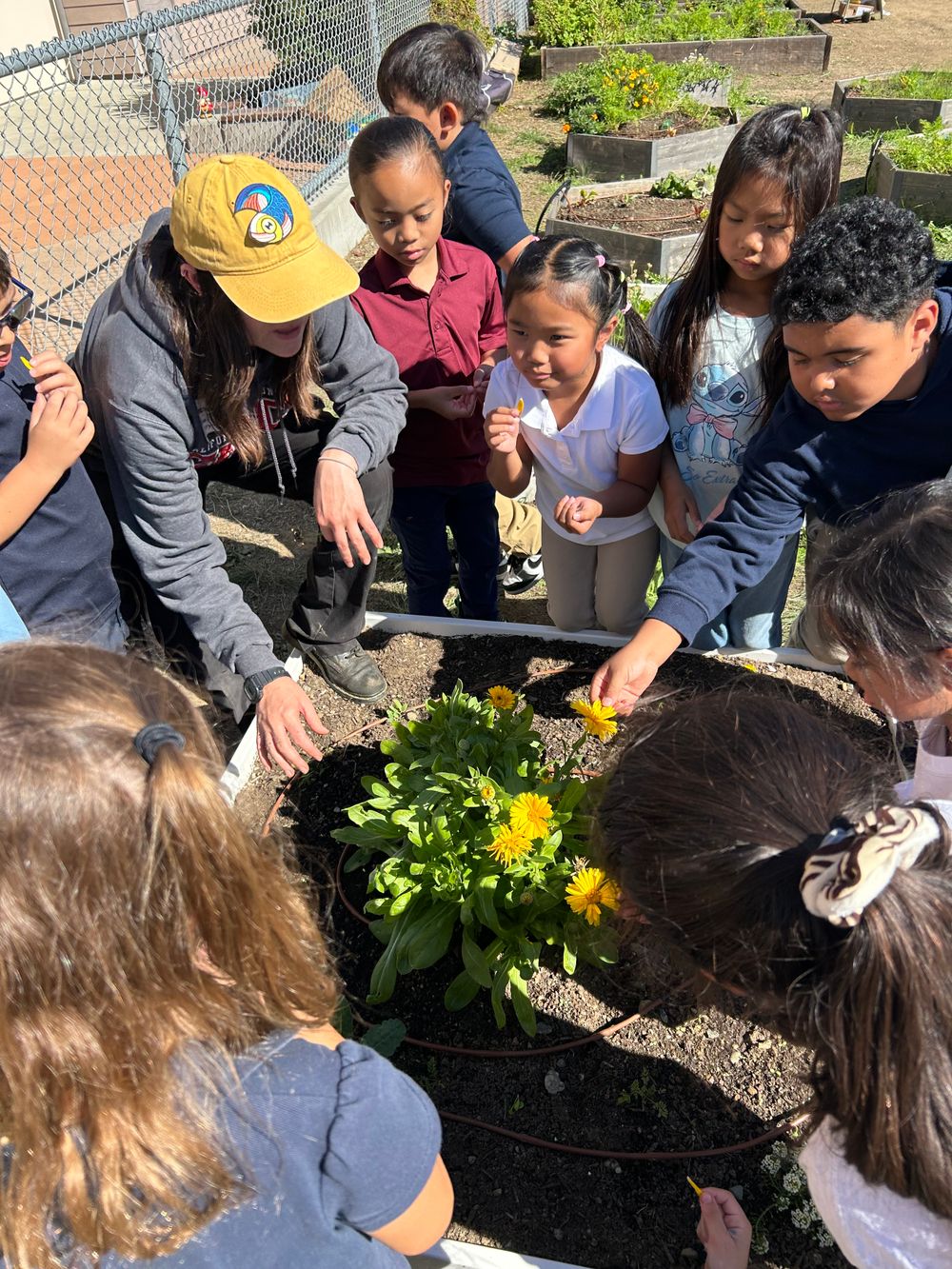
- Hands-on food education, including activities in school gardens, on farms and in culinary classes
School food pantries and hands-on food education are new in 2026. In the 2022 round, staffing and training covered roles such as a farm to school coordinator, and training food service staff in scratch cooking, local foods and reducing food waste. It did not cover training staff outside food service.
What this means
For SFAs
- How the money is released
- By formula from the California Department of Education (CDE) to SFAs that opt in. It is not a competitive grant.
- Who receives it
- SFAs that take part in the federal school meal programs. CDE allocates the money to each SFA's nutrition services department.
- Priority
- Under Education Code section 49507, every SFA gets a base amount, with priority for SFAs that did not receive the last round, then more for SFAs with high shares of students eligible for free or reduced-price meals; the rest follows total meals served. In 2022, each SFA got a base of about $100,000 plus a share based on meals served.
- Program area 5
- An SFA can spend its money on any combination of the five areas, including all of it on hands-on food education.
- Staffing
- Because the money is one-time, permanent positions are discouraged. An SFA can use it to continue a partnership with a CBO that provides school garden education, or to start one, and CBOs can help pair KIT funds with other or matching sources to keep a program going.
- Permanence
- Program area 5 is now permanent in state law as an allowed use of KIT funds. The funding is not: the $500 million is one-time, and any future round needs a new budget appropriation. KIT has had four one-time rounds: $150 million in 2021, $600 million in 2022, $145 million in 2025 and $500 million in 2026-27.
- Still to be decided by CDE
- The allocation formula and each SFA's amount; which costs qualify, such as staff time, supplies, teacher training, or garden and farm infrastructure; reporting; and the dates to opt in and receive the money.
For community organizations
- Community-based organizations
- CBOs do not apply. They can partner with an SFA as a contracted provider.
- What is allowed
- CDE has not set spending criteria for program area 5 yet. Based on earlier rules, such as those for spending school meal funds on nutrition education, activities could be expected to connect to the school meal program, for example teaching the parts of a meal or encouraging students to eat more fruits and vegetables.
When the money arrives
July 2026
Signed into law
SFAs can begin planning next year's programs.
Fall 2026 to early 2027
CDE sets how the money is allocated and other administrative procedures
First half of 2027
Money allocated to SFAs that opt in
Expected; CDE sets the exact dates.
June 30, 2030
Deadline to commit the money
Signed contracts or purchase orders in place.
June 30, 2031
Final report due
How the money was spent.
We'll email you when CDE sets its spending criteria.
How we can help your SFA
We help SFAs, and the community organizations that partner with them, put KIT funds into hands-on food education.
- Training. Webinars co-hosted with CDE for SFA staff on using KIT funds for hands-on food and garden education.
- Toolkits. One for SFAs on what the money can pay for and how to contract with a partner, and one for community organizations that partner with SFAs. Both are in development.
- Introductions. We connect you with coalition members near you who run garden and food education programs.
Write to us at hello@caschoolgardens.org about your SFA's plans.